




Intracranial ischemic stroke is caused by blood clots blocking the blood vessels in the brain, leading to ischemia and hypoxia of local brain tissue, and then necrosis. Once the disease occurs, the patient may experience symptoms such as limb weakness, slurred speech, crooked mouth, blurred vision, and even fall into a coma in severe cases, which is com risco de vida . Além disso, mesmo que o paciente sobreviva à doença, eles geralmente têm sequelas de graus variados, como paralisia dos membros e comprometimento cognitivo .
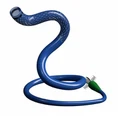
A principal função do stent de remoção de trombus é remover o trombo que bloqueia o vaso sanguíneo . É um dispositivo médico feito de materiais especiais com boa flexibilidade e suporte . em uso real, o médico enviará cuidadosamente o microcateter ao longo do caminho do vaso para a localização da localização até o altero Microcateter . O stent de remoção de trombos se abrirá e se encaixará firmemente com o trombo . O médico removerá lentamente o stent de remoção de trombos junto com o trombo, para que o vaso sanguíneo bloqueado possa ser restaurado e o suprimento de sangue para o cérebro pode ser restaurado.
The thrombectomy stent is not suitable for all patients with intracranial ischemic stroke. It has relatively clear applicable conditions. Generally speaking, the thrombectomy stent has a good therapeutic effect on intracranial ischemic stroke caused by large vessel occlusion. For example, when large blood vessels such as the terminal end of the internal carotid artery and the M1 segment of the middle cerebral artery are blocked, the thrombi in these areas are usually large in size and hard in texture. It may be difficult to completely remove the thrombi by relying solely on drug thrombolysis, and the powerful grasping ability of the thrombectomy stent can come in handy. In addition, thrombectomy treatment has a strict time window limit, and it is usually recommended to be performed within 6-24 hours after onset. Of course, the effect will be better if the treatment can be carried out in a shorter time. Because brain tissue is very sensitive to ischemia, every minute and every second of delay may cause more nerve cell death and affect the patient's prognosis.
Before performing thrombectomy stent treatment, the doctor will first conduct a comprehensive assessment of the patient, including detailed inquiries into the medical history, neurological examinations, and the use of imaging examinations such as cranial CT, MRI, and cerebral angiography (DSA) to accurately understand the patient's condition and determine whether the thrombectomy stent is suitable for treatment.
During the treatment, patients generally need to be under local or general anesthesia. The doctor will first puncture the patient's groin and insert a thin catheter (vascular sheath) into the femoral artery to establish a channel to the brain blood vessels. Then, the guide catheter is gradually sent along the vascular path to the area close to the thrombus through the vascular sheath to play a supporting and guiding role. Then, with the assistance of the guide catheter, the microcatheter is carefully sent to the thrombus, and the thrombectomy stent is accurately released into the thrombus through the microcatheter. After the thrombectomy stent is fully opened and tightly combined with the thrombus, the doctor will slowly pull the thrombectomy stent out of the body together with the Trombus . Finalmente, a perviedade dos vasos sanguíneos é verificada novamente através da angiografia cerebral para garantir que o trombo seja efetivamente removido e os vasos sanguíneos restaurem um bom fluxo sanguíneo .
Compared with traditional drug thrombolytic therapy, thrombectomy with stents has many obvious advantages. It can directly remove the thrombus from the blood vessel, and has a higher recanalization rate for large vessel occlusion, greatly improving the treatment effect. Moreover, it can restore the blood supply to the brain in a shorter period of time, reduce the death of nerve cells, thereby reducing the risco de incapacidade grave nos pacientes e melhorando a qualidade de vida dos pacientes .